

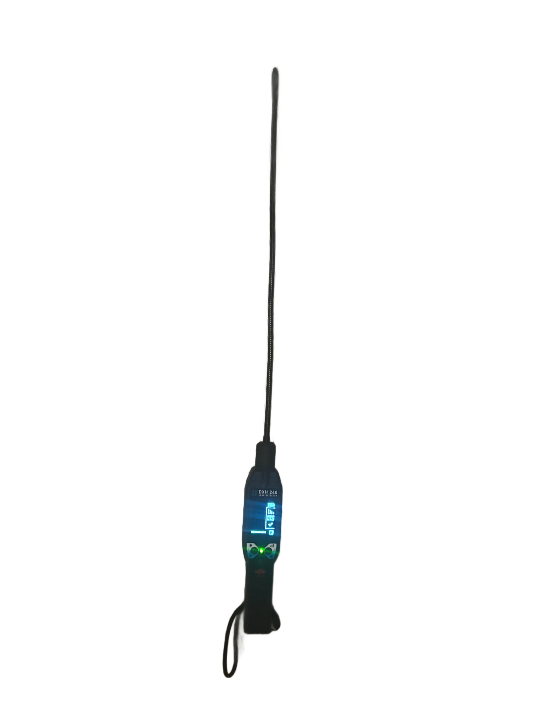
Accurately locating leaks in automotive A/C systems is one of the most challenging parts of HVAC service for cars and trucks. Small leaks, inaccessible components, and modern compact system designs make traditional detection methods less effective. Hydrogen tracer gas leak detection offers a fast, precise, and highly reliable alternative for technicians and service centers.
For the customer….Leak check automobile air conditioning systems-UV detection inconveniences customers and potentially costs customers more money than needed. With UV detection, new refrigerant with the UV dye penetrant is put into the leaky air conditioning system with the customer having to drive it for a few days to allow the dye penetrant to leak out so that it can be detected. This extends the repair making the customer make the second trip in so the technician can view the UV dye entrant results. If the leak is large, a full second refrigerant charge may be needed, significantly increasing the repair costs. Using the hydrogen leak detector with the 5/95 tracer gas allows for the repair to be detected, repaired, re-checked and recharged in one trip for the customer.
For the repair facility….Refrigerant leak detectors make the repair for difficult for the repair facility. Using refrigerant as the tracer gas, the refrigerant must be reclaimed after the detection to allow for the repair to take place. To check the repair, the refrigerant must be re-introduced into the AC system. Using the hydrogen leak detector with the 5/95 tracer gas reduces steps as the 5/95 tracer gas can be released safely into atmosphere skipping the reclaim steps.
H2 Leak Detection…Just a better experience for customers and automotive repair shop in leak checking automobile air conditioning systems.
Safe—Fast—Convenient for Customer
Hydrogen tracer gas helps identify leaks in evaporators, condenser coils, hoses, O-rings, seals, and compressor housings—even when traditional tools like UV dye or electronic refrigerant detectors fall short.
Newer vehicles often use lighter, more compact A/C systems, with tighter tolerances and more plastic and aluminum components. Hydrogen tracer gas can detect very small leaks that slowly diminish refrigerant levels over time.
Some leaks only appear when the system is pressurized, cold, or hot. Pressurizing the system with hydrogen tracer gas allows these leaks to be detected under controlled test conditions.
Hydrogen tracer gas detection is ideal for EVs and hybrid vehicles, where traditional dye methods or high-pressure refrigerant testing may not be suitable. The hydrogen/nitrogen mixture is non-flammable, non-reactive, and safe for sensitive A/C components.
When used as a safe, non-flammable mixture (typically 95% nitrogen and 5% hydrogen), hydrogen becomes an exceptionally effective tracer gas for A/C leak detection because it:
Penetrates even the smallest openings due to its extremely small molecular size.
Diffuses rapidly, reaching leak points that other gases cannot.
Is easily detected with highly sensitive sensors designed to pick up even trace hydrogen levels.
Is safe and non-corrosive, making it suitable for automotive A/C components and refrigerants.
This makes hydrogen one of the most accurate and technician-friendly leak tracing methods available.
Hydrogen tracer gas leak detection gives automotive technicians a powerful diagnostic tool for identifying refrigerant leaks quickly and accurately. By pressurizing the system with a safe hydrogen/nitrogen mixture and using a dedicated detector, even the smallest leaks can be located with confidence—saving time, reducing costs, and ensuring the A/C system is repaired correctly the first time.