

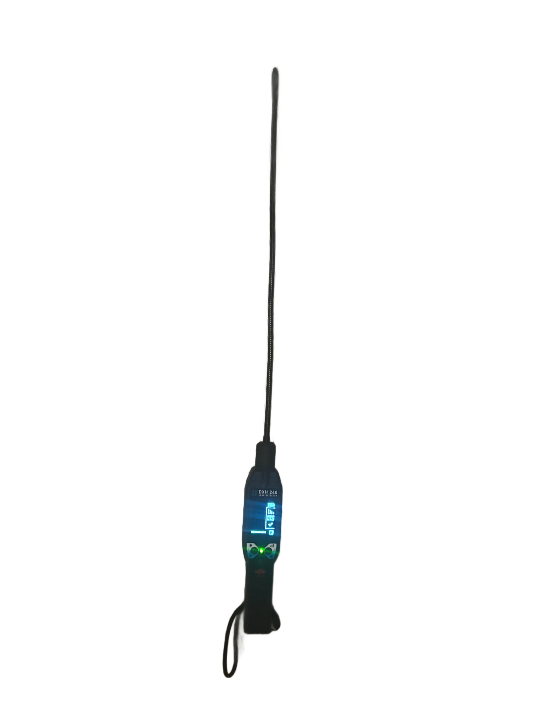
Supermarket refrigeration systems contain thousands of feet of piping and thousands of pounds of refrigerant. Even small leaks can drive significant refrigerant loss, compliance exposure, and operating costs.
Using a hydrogen tracer gas leak detector provides a highly sensitive, proactive method for identifying and locating micro-leaks before they impact annual leak rates, refrigerant spend, or regulatory thresholds. Using a hydrogen leak detector is very simple and does not require intense training but can detect and locate leaks as small as 0.10 oz/yr of most refrigerants used.
Hydrogen tracer gas leak detection uses a safe, non-flammable 5% hydrogen / 95% nitrogen forming gas mixture to locate extremely small refrigerant system leaks.
Hydrogen molecules are significantly smaller than refrigerant molecules, allowing the detector to identify:
Micro braze porosity
Hairline cracks
Valve stem seepage
Schrader core leakage
Threaded fitting leaks
Case evaporator connection leaks
These are almost always undetectable with nitrogen pressure tests alone.
Technique is to pressurize the refrigeration system then use the hydrogen leak detector moving the tip around the suspected leaking joints either touching the pipe or no more than 1/4″ away moving at a rate of 1-2″ per second. Once a signal is detecting indicating a leak, the sensitivity of the leak detector can be reduced to help pinpoint the exact location down to the size of a dot written by a ballpoint pin.
Tracer gas is a 5% hydrogen / 95% nitrogen and at that concentration is non-combustible, non-flammable green label gas due to the low concentration of hydrogen. Simply pressurize the refrigeration piping to a level as close to the operation pressure as possible. In the past, helium has been the tracer gas of choice. But due to the high cost and availability of helium, the hydrogen 5/95 mixture is a more economical choice and is just as good as helium when using our hydrogen leak detectors. Cost of the 5/95 in most markets is $75-85 for a standard cylinder. The 5/95 can also be used for the pressure testing of the piping system. So you can use as the pressure decay test gas then right away use the hydrogen leak detector to locate the leaking joints.
Hydrogen tracer gas is most valuable during:
New store construction (pre-charge)
Rack replacements
Case remodels
Piping extensions
Chronic leak troubleshooting
Hard-to-locate intermittent leaks
It is especially useful before ceilings are closed and insulation is installed.
Most refrigeration contractors for supermarket and warehouse stores primarily use nitrogen pressure testing to determine the amount of leakage in the overall refrigeration system. This type testing is good for finding macro-leaks in the system not micro-leaks. Tracer gas leak detection in general will find leaks 1000 times smaller than a macro-leak method such as soap bubbles forming. In miles of piping, there can be many micro-leaks that add up to a significant loss of refrigerant gas. Just one or more macro-leaks can cause a very significant total leakage of refrigerant in a calandar year, leaking 24/7 365 days per year.
A standing nitrogen pressure test is designed to detect:
Poorly brazed joints
Loose fittings
Major connection failures
Obvious valve leaks
However, it often does not detect micro-leaks such as:
Microscopic braze porosity
Hairline cracks
Valve stem seepage
Schrader core leakage
Minor threaded fitting seepage
These smaller leaks may not produce measurable pressure decay during a standard 24-hour hold — especially in systems containing thousands of feet of piping.
